
NASSCO
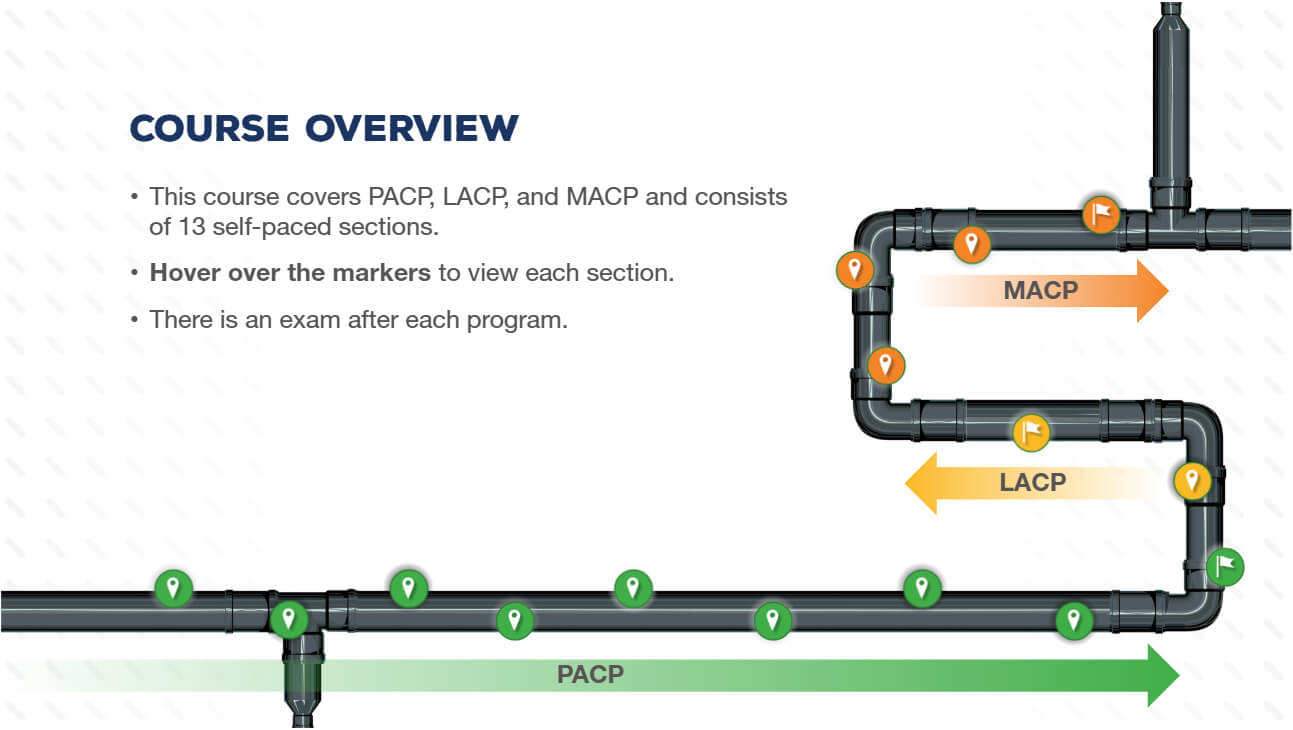
NASSCO partnered with Neovation to rebuild its PACP™/LACP™/MACP™ recertification program as a 13-module eLearning series. A failing legacy course became a 98%-pass-rate, revenue-generating program that doubled recertification capacity and earned approval for the first-ever self-paced initial certification since the program launched in 2002.


The investment was recovered in seven months, and 85% of learners recommend the course.
An instructor-led program that delivered outstanding results, but capacity could never match demand
NASSCO’s certified workforce of camera operators, inspectors, engineers, and system owners must recertify every three years. The instructor-led recertification program delivered outstanding results but faced scalability constraints that threatened to leave certified professionals without a path to renew. Each class was capped at 15 students, and the 230+ sessions needed annually far exceeded NASSCO’s trainer capacity. Many professionals could not find sessions in time and were forced to retake the full 3-day initial certification at $1,240, adding significant cost and lost field time.
More professionals due than seats to put them in
The classroom-only capacity math
25–30% of NASSCO’s certified trainer network is expected to retire in the next decade. Then came the Version 8 Manual, which introduced hundreds of granular coding changes across all three certification tracks. A content update to the existing course was not an option, as the eLearning predecessor’s module-breaking errors and content-skipping vulnerabilities meant the entire platform needed to be rebuilt from the ground up.
NASSCO faced a decision: continue relying solely on instructor-led training, knowing that capacity could never match demand, or build a modern, scalable digital pathway that could complement the instructor-led program and serve the full certified workforce.
The trainer network is shrinking
Certified trainer network, indexed to today

“This course is life-changing for our industry!”
 Laurie Perkins, P.E. — Training Director, NASSCO
A 13-module recertification series built the way inspectors actually work
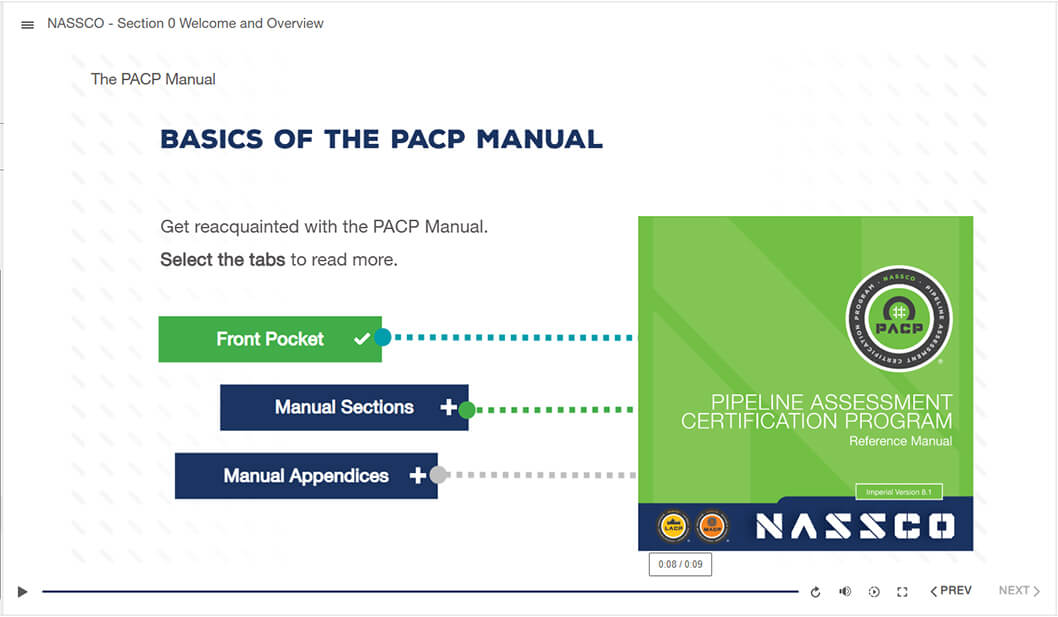
Train the reference skill, not the memory
Rather than digitizing lecture slides, Neovation’s Custom Learning team designed a Manual-as-Reference pedagogy that trains technicians to navigate and apply the Version 8 Manual under realistic field conditions, the same way it should be used during an actual inspection.

Simulations that mirror the service vehicle
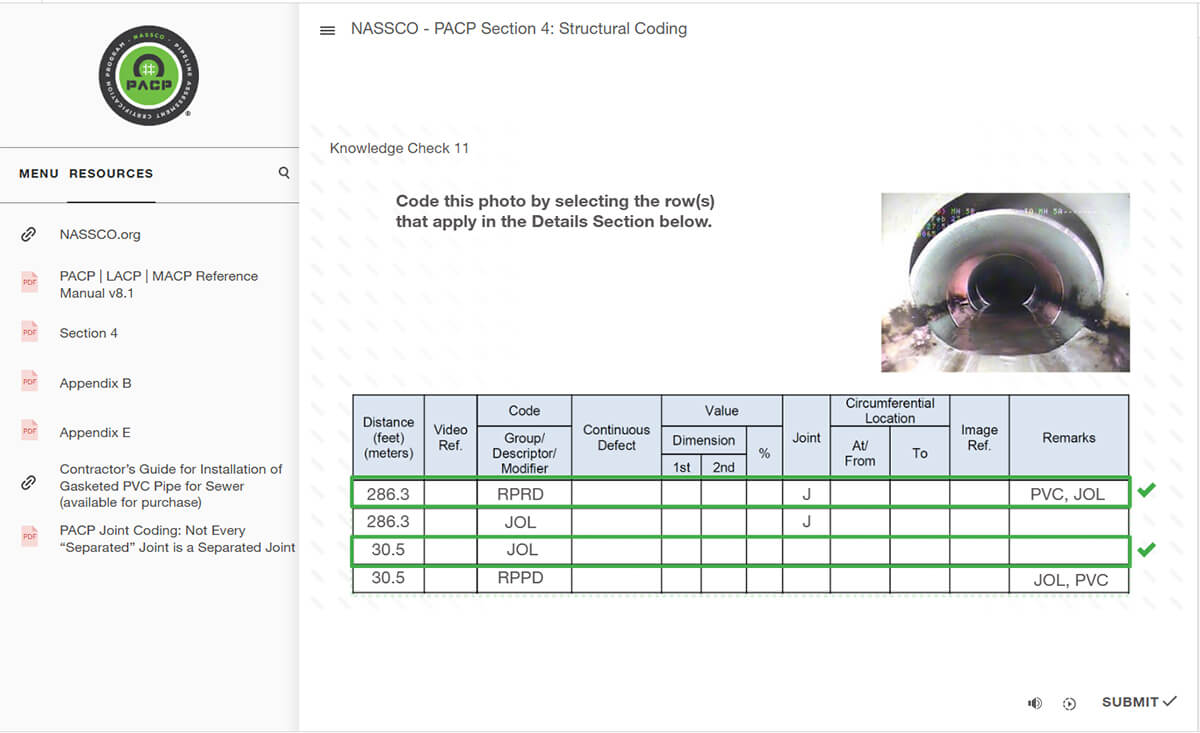
The design was grounded in a key insight: this workforce possesses deep field expertise but varying levels of digital literacy. The eLearning environment needed to look and feel like their professional tools. Simulations mirror the CCTV monitors and inspection software technicians use in their service vehicles daily.
Auditable integrity, accessible to every learner
Forced-completion architecture ensures every interaction is engaged before progression, directly addressing credentialing body concerns and providing auditable proof of 100% content completion. The course follows Universal Design for Learning: mobile-responsive delivery via the Go.Learn app, digital Version 8 Manual integration, and audio narration for diverse literacy levels.
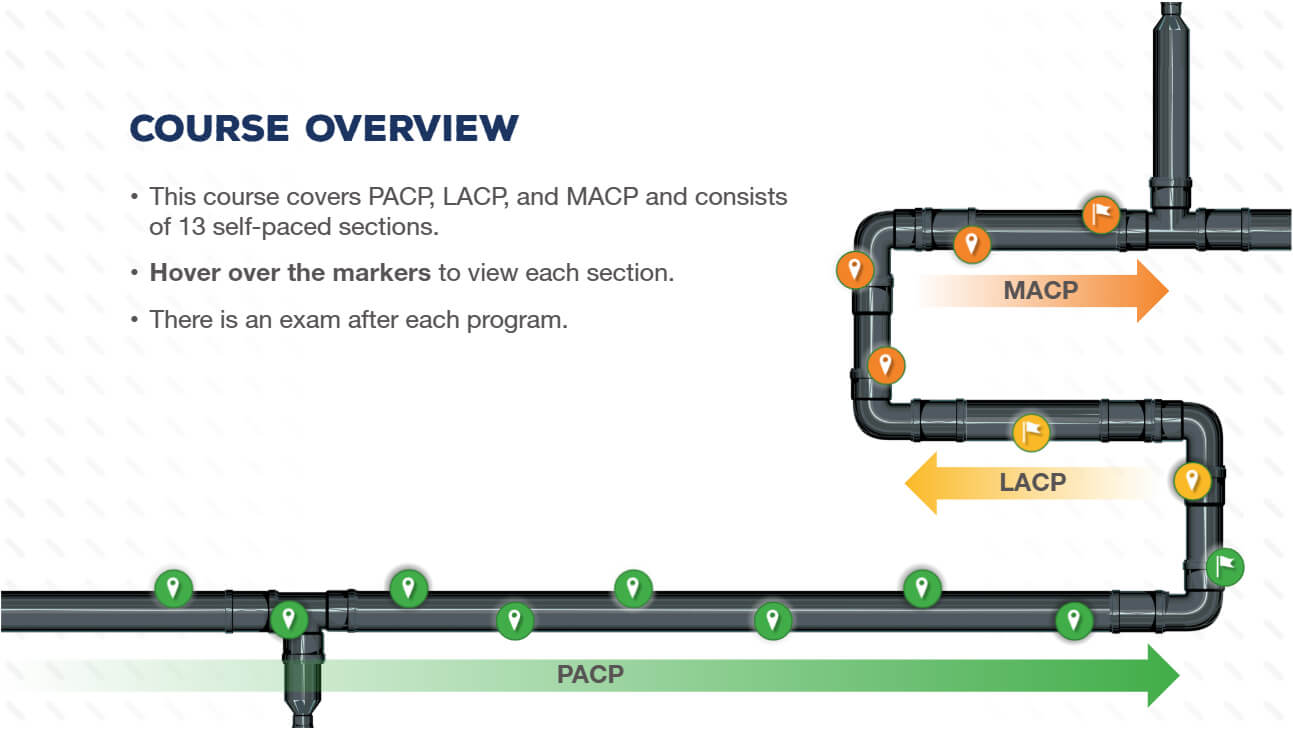
Five kinds of practice, one field-ready inspector
The certification validates five core competencies mapped to Version 8 Manual requirements.
Field-authentic CCTV inspection scenarios mirror actual service vehicle monitors and software, with manual navigation and defect coding.
Exercises require learners to locate precise codes in the digital Version 8 Manual.
Chronological data entry simulations mirror the actual inspection workflow, following the standard field inspection form.
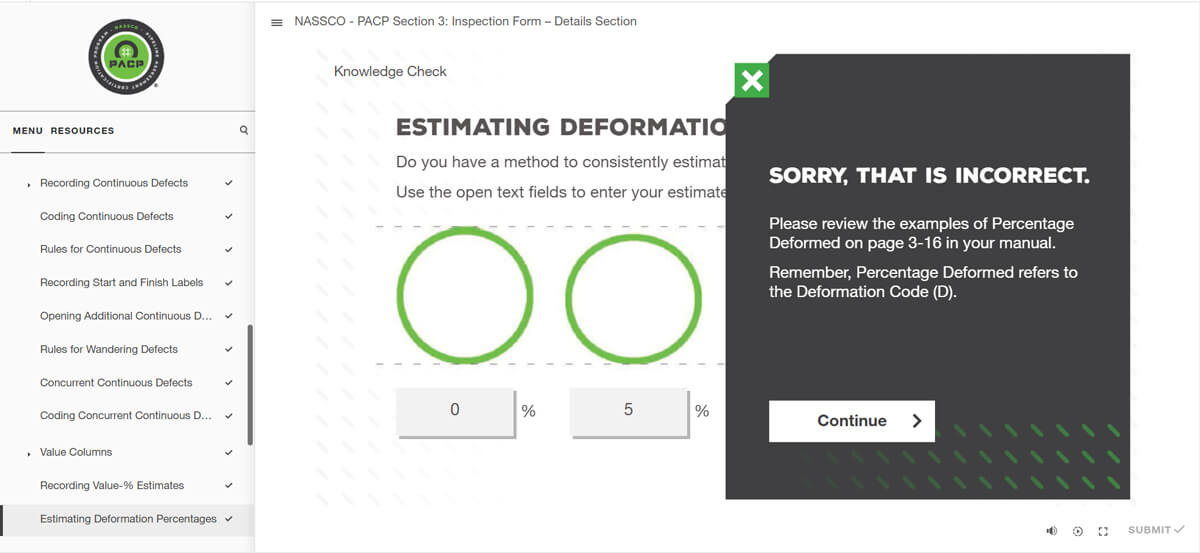
Wrong answers redirect to specific manual pages, reinforcing the reference skill. Waiting periods between exam retakes require learners to return to the course material, transforming a failed attempt into a guided review.
Foundational coding builds to high-stakes defect discrimination and complex distinctions like Fracture vs. Crack.
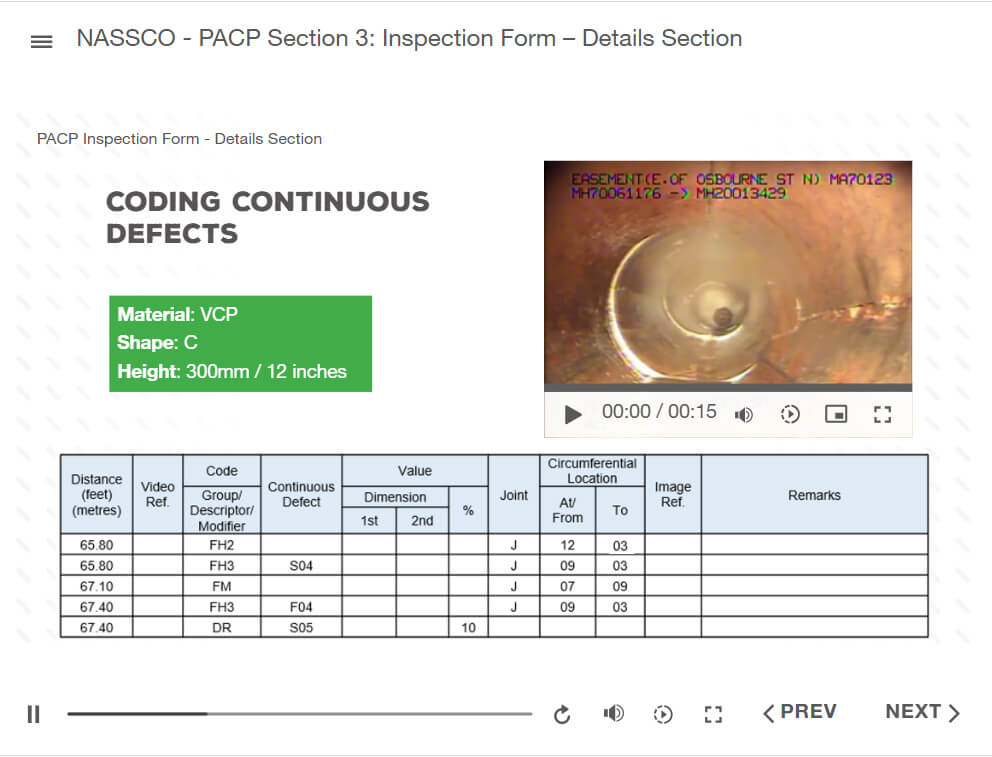
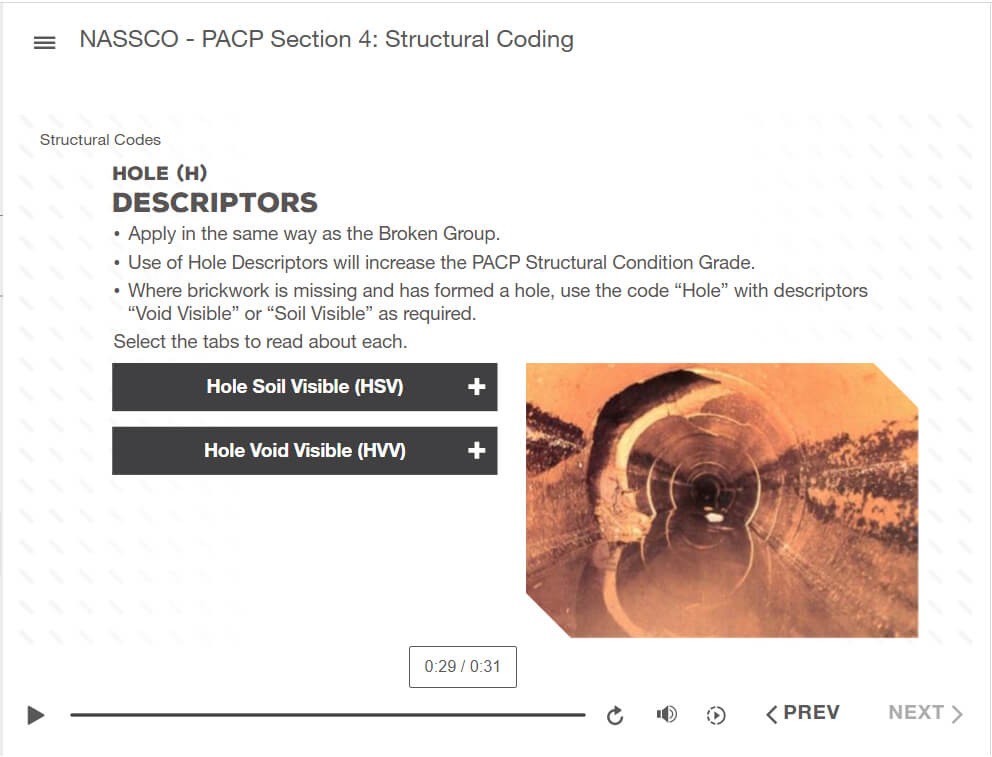
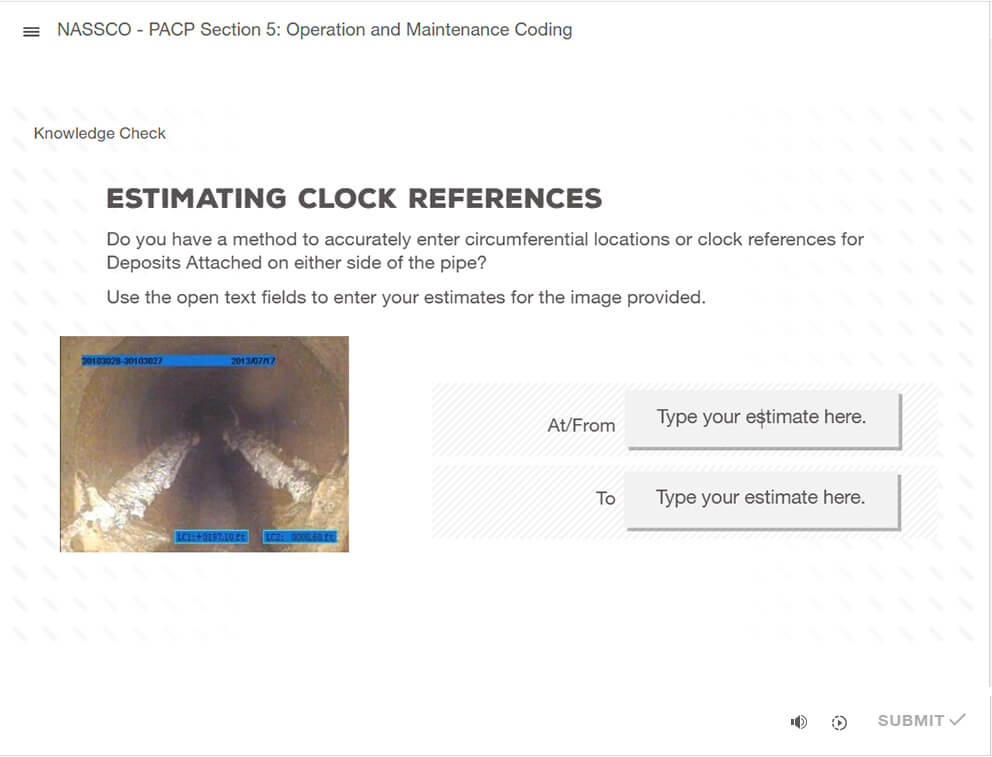
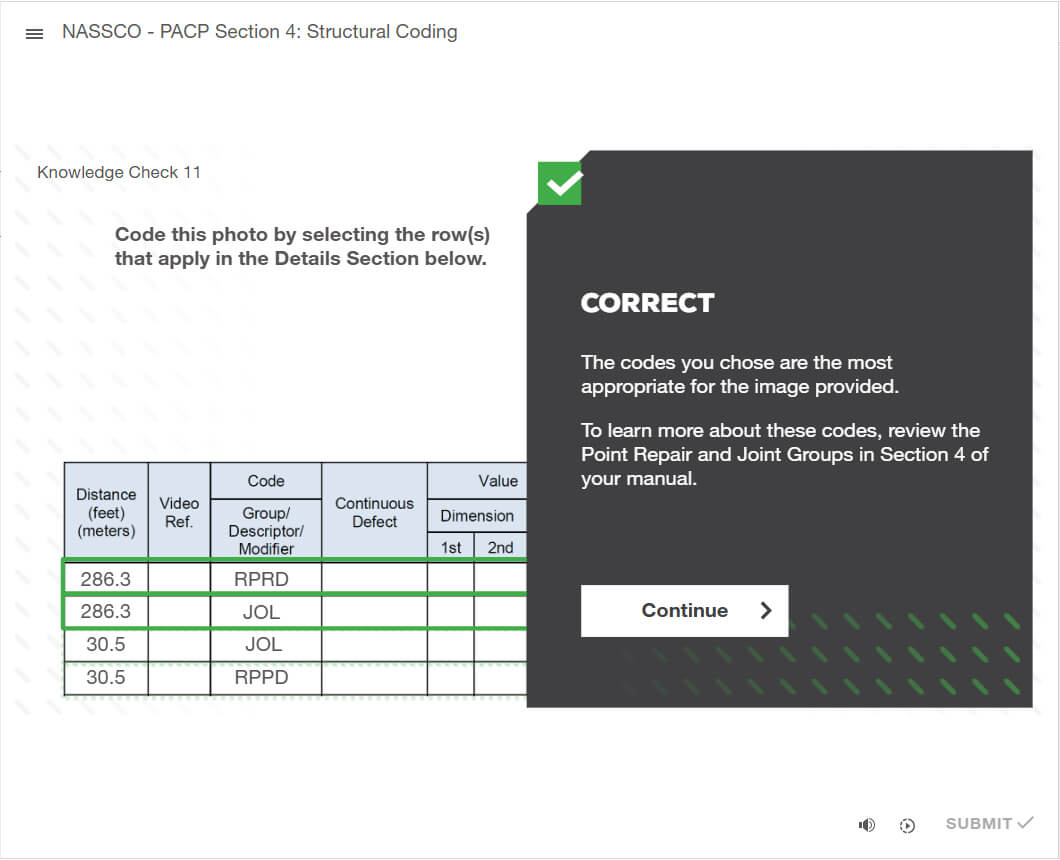
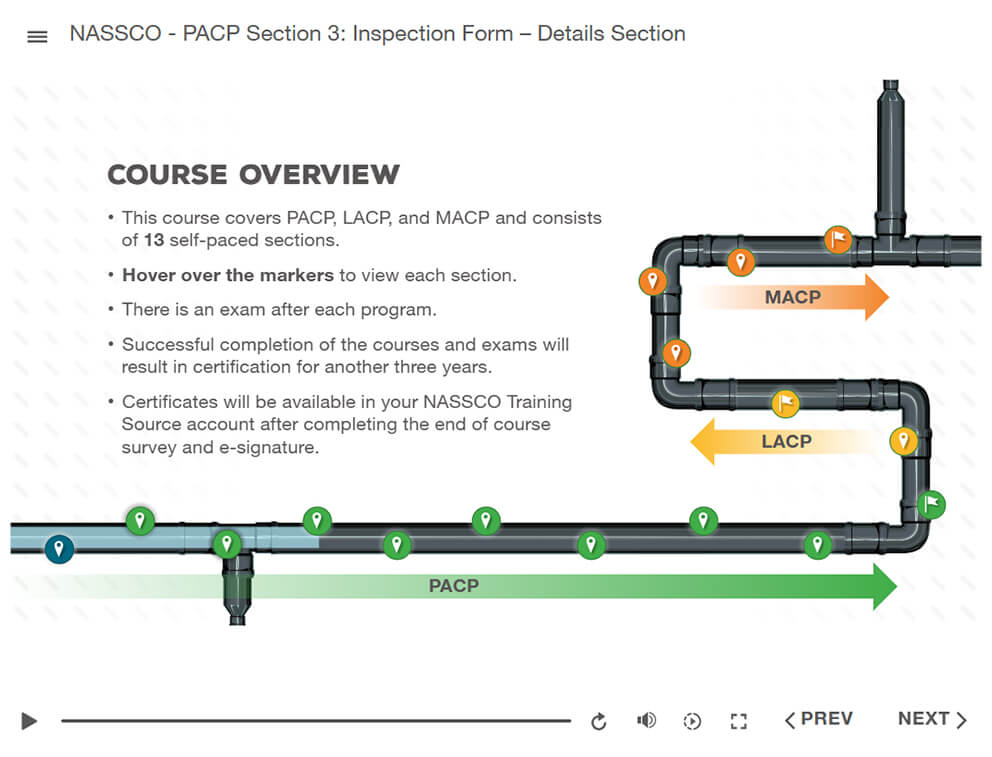
Professionals complete the equivalent of three full days of training content without a single day of lost productivity.
Up to $3,000total cost per recertification, including travel, lodging, and lost productivity
- 2–3 days away from the field per recertification
- Each class capped at 15 students
- Many professionals could not find sessions in time
- Those who miss their window retake the full 3-day initial certification at $1,240
$775per enrollment, with zero travel and zero days out
- Learn across evenings, weekends, and breaks between inspections
- Approximately 24 hours of course time, with a typical 3-week enrollment-to-completion timeline
- Mobile-responsive via the Go.Learn app
- Auditable proof of 100% content completion
Instructor-led training remains a valued part of NASSCO’s program — the self-paced pathway adds capacity the classroom alone could never reach. ILT enrollment stayed strong even as the eLearning series launched.
See the recertification series in action
Gold Award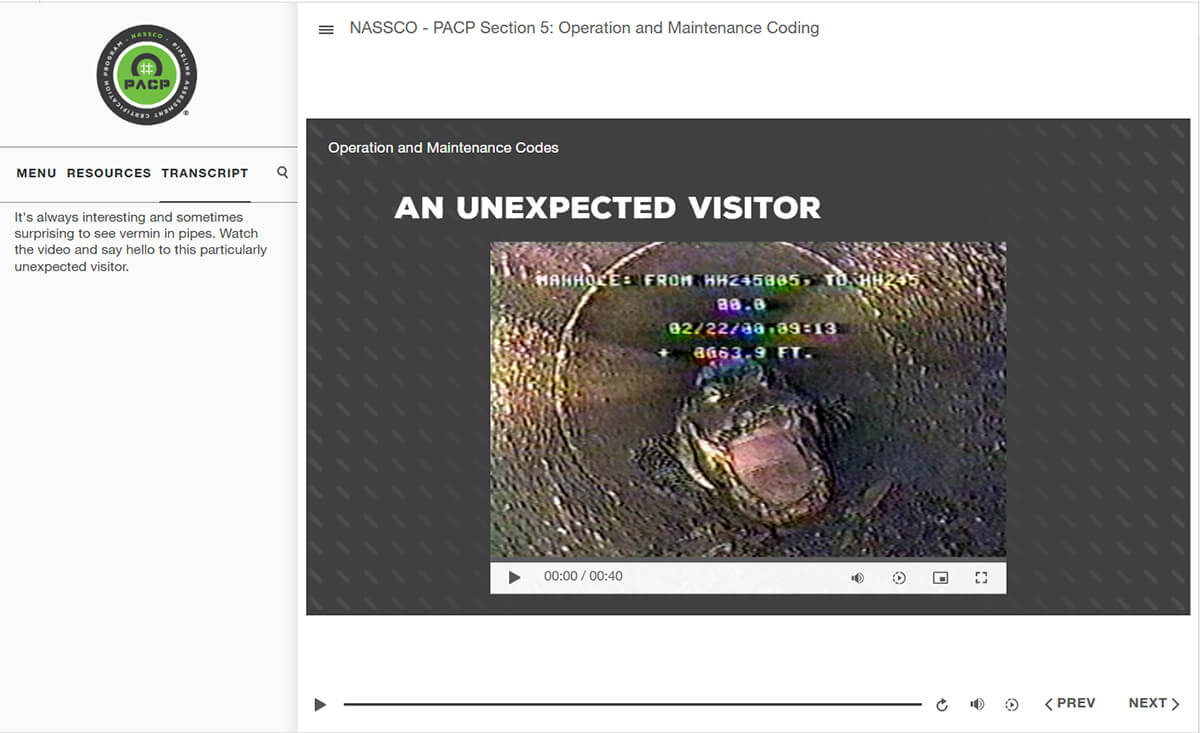
Results that rebuilt trust in digital recertification
The investment was recovered within seven months of launch. Significant aggregate annual savings are estimated for employers and professionals.
No module-breaking errors since launch. The program’s quality directly led NASSCO’s board and leadership to approve development of a self-paced initial certification course, the first time initial PACP™/LACP™/MACP™ certification will be available outside a live classroom since the program launched in 2002.
85% of learners recommend the course (48% strongly agree, 37% agree). The exam pass rate is 98%, versus 92% in the instructor-led program.
It enables us to reach a larger audience with fewer resources while maintaining the high standards expected of the program. The result is more efficient operations and better overall experience for everyone involved.

Outcomes
About NASSCO
Industry Association — Underground Infrastructure
NASSCO is the leading industry association dedicated to the assessment, maintenance, and rehabilitation of underground infrastructure. Founded in 1976, NASSCO has set the standards for the wastewater industry through its Pipeline, Lateral, and Manhole Assessment Certification Programs (PACP™/LACP™/MACP™). These certifications ensure that more than 20,000 active certified professionals across the Americas apply a consistent, standardized coding language, data that directly informs billions of dollars in public infrastructure spending decisions annually.
For more information about NASSCO, visit their website. We build member education and certification programs for trade and professional associations — see our association eLearning services.
Explore more eLearning projects


LGCA Liquor Service & Retail Certification
Built an online liquor certification program from scratch
A regulatory body needed to create a comprehensive online certification program for liquor retail staff across the province.


Construction Safety Association of Manitoba
Converting classroom safety expertise into scalable eLearning
A construction safety association had decades of expertise locked in instructor-led training—limiting their reach and scalability.


Canada Soccer
Transformed in-person coach training into a blended learning program
A national sports organization needed to scale coach education to 32,000+ coaches while preserving what made in-person training effective.
Ready to achieve results like these?
Every project starts with a conversation. Tell us what you’re working on and we’ll show you what’s possible.